

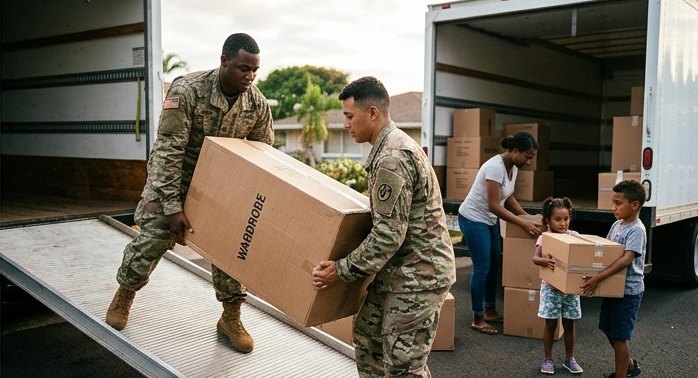
Orders come when they come. They don't check Zillow first, and they don't care that you bought near the top of the market. If you're stationed at Pearl Harbor, Schofield, Kāneʻohe Bay, or anywhere else on island and you've just learned you're PCSing — while owing more on your home than it would sell for — this article is for you.
First, take a breath: this is one of the most common situations we help with, and the military family in it did nothing wrong. Hawaiʻi prices, a VA loan with little or nothing down, and a market dip is all it takes.
The PCS squeeze, in numbers
Here's the math that creates the problem. Say you owe $780,000 and the home would realistically sell for $720,000. Selling "normally" means bringing roughly $60,000 in cash to closing — plus you'd still pay moving costs and set up a household at your next duty station. Most families can't do that, and shouldn't have to.
Not sure where you stand? Our 60-second estimator lets you run your own numbers privately.
Why a PCS counts as a hardship
A short sale generally requires a documented financial hardship, and a Permanent Change of Station is one of the most widely accepted hardships there is — the relocation is involuntary, documented by your orders, and directly changes your housing situation. For VA loans, this falls under the VA Compromise Sale program, which exists precisely for situations like this. You don't have to be behind on payments to qualify.
Your real options, honestly compared
1. Rent it out from afar
Sometimes this works. But run the honest numbers: mortgage, GET tax, property management (usually 8–10% on Oʻahu), maintenance, vacancies — from five time zones away. If rent doesn't realistically cover the carrying costs, you're not keeping an investment; you're mailing money to Hawaiʻi every month while the stress compounds.
2. Talk to your lender about relief
Forbearance or a loan modification can help with a temporary income dip — but they don't solve a permanent move. You'd still own a home you can't live in and may not be able to afford to keep.
3. A VA Compromise Sale
Sell at fair market value, let the VA and your lender settle the shortfall, and leave the island with the debt resolved instead of following you. No cost to you as the seller, and in approved cases the lender typically waives the deficiency. For many PCSing families, this is the cleanest exit.
How it fits your PCS timeline
- Orders in hand: free consultation; we review your loan, value, and options.
- 4–8 weeks out: hardship package assembled, home listed at fair market value.
- Offer secured: the file goes to your lender and the VA for review — the negotiation is handled for you while you handle the move.
- After you've reported in: closings can finish with you off-island; signing can be handled remotely.
You do not need to still be in Hawaiʻi for the sale to close. Families PCS mid-process all the time — the paperwork travels; you don't have to.
What to gather now
- A copy of your PCS orders
- Your latest mortgage statement
- Recent LES/pay stubs and two months of bank statements
- Last two years of tax returns
That's most of the hardship package right there — we help you with the rest, including the hardship letter.
The bottom line
A PCS with an underwater home feels like a trap, but it's a solved problem with a built-in program and a clear path. Every case depends on your lender, your loan, and the VA — no one can guarantee an outcome — but the sooner you look at your options, the more of them you'll have.